Gear & tech 6 min
How to use a treadmill to train for an outdoor race

Treadmill training can prepare you for outdoor racing, but the belt-assisted stride and lack of wind resistance mean you need deliberate adjustments to replicate outdoor demands. Add gradient work, include tempo and interval sessions, and finish your build with outdoor running to train your neuromuscular system for the real surface and conditions you'll face.
Why treadmill training alone isn't enough for outdoor races
Treadmills provide a forgiving, climate-controlled environment that makes running feel easier than outdoor terrain. The belt does part of the work for you, your legs never experience true ground impact, and you have no wind resistance. This means treadmill fitness doesn't fully transfer to outdoor racing without supplementary work.
The gap is real but bridgeable. You'll need to address three factors: biomechanical demand, strength and stability, and environmental variability.
Add gradient to replicate outdoor effort
A 1% gradient on a treadmill roughly mimics outdoor running effort by removing the belt assistance. Most runners training on flat treadmill surfaces are actually undertrained for the outdoors. Start adding gradient early in your block.
- Run steady-state efforts at 1–2% gradient to replicate normal outdoor aerobic work
- Include one session per week with hill repeats (4–8% gradient, 2–4 minutes per rep)
- Use variable gradient within longer runs to build resilience on mixed terrain
- Finish taper weeks on flat to allow nervous system recovery before race day
Structure treadmill workouts for race-specific power
Your treadmill sessions should align with your outdoor race goal. The key is tempo work and race-pace intervals, done at gradient, to build the right energy systems and neuromuscular adaptation.
- Tempo runs: 20–40 minutes at threshold pace (1–2% gradient), building lactate-buffering capacity
- Race-pace repeats: 5–10 × 3–8 minutes at goal race speed with 1–2 minute recovery (1–2% gradient)
- Long runs: Start flat or gentle gradient (0–1%) and include 2–3 surges at race pace midway through to practise pacing discipline
- Recovery runs: Easy pace, flat, to allow adaptation
Transition to outdoor running in your final training block
The final 4–6 weeks before race day should include at least 40% of your volume outdoors. This acclimatises your stabiliser muscles, trains your vestibular system, and lets you practise pacing on variable terrain.
Run your key workouts—tempo runs and race-pace repeats—outdoors when possible. This is when your body learns to handle wind, uneven ground, and the psychological demand of real racing. Treadmill work can fill in lower-intensity sessions or act as a backup on poor weather days.
Account for treadmill pacing and speed differences
Most runners run faster on a treadmill than they do outdoors, partly because the belt removes braking forces and you're not fighting wind. Don't assume your treadmill pace is your race pace.
- Run a test effort outdoors first: a 20–30 minute tempo or a 5K time trial to establish your true outdoor pace
- Set treadmill efforts 0.5–1.0 km/h faster than outdoor equivalents if training indoors only
- When you move outdoors, expect your outdoor pace to feel harder for the same effort (RPE) initially, then adapt within 1–2 weeks
Use data to bridge indoor and outdoor training
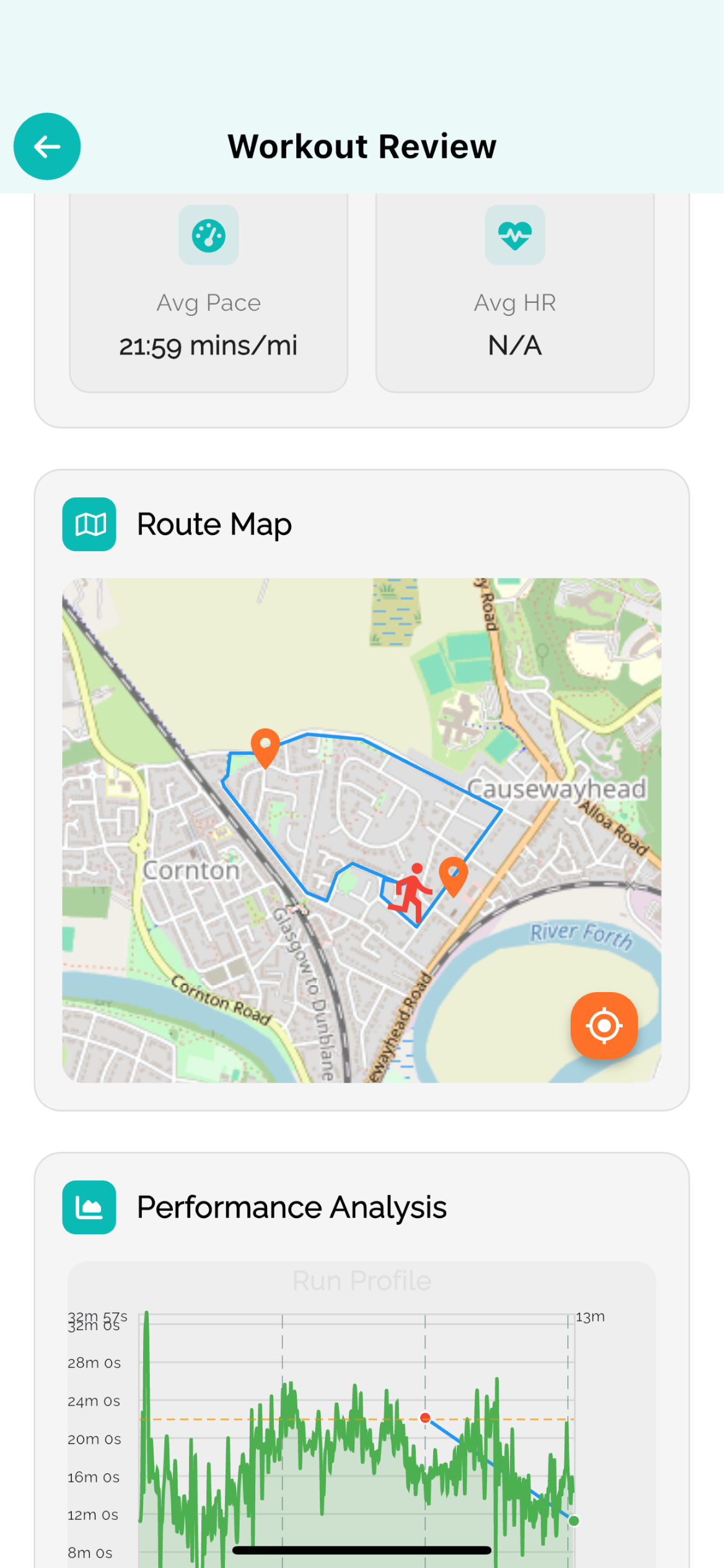
Smart training balances treadmill convenience with outdoor specificity. By logging both treadmill and outdoor sessions—tracking pace, gradient, heart rate, and perceived effort—you can adjust your approach week to week. Apps like RunV let you log structured workouts with notes on terrain and conditions, so you're not guessing whether your treadmill threshold work actually translates. Over time, your data reveals your personal treadmill-to-outdoor conversion ratio, making it easier to set realistic indoor paces and trust them when the race comes.
The bottom line
Treadmill training is a practical tool for building aerobic fitness and consistency, especially during winter or when life makes outdoor running difficult. But it's not a complete substitute. Use gradient, include race-pace work, and move outdoors progressively in the final month of your build. This combination gives you both training volume and the outdoor-specific adaptations that deliver race day performance.
FAQ
- Can I run my entire race training on a treadmill?
- You can build significant fitness on a treadmill, but it's suboptimal. The belt removes ground-impact demand and wind resistance, so your outdoor race will feel harder. Aim for at least 30–40% outdoor volume in the final 6 weeks of training, and do key sessions (tempo, intervals) outdoors when possible to practise real-world pacing and terrain.
- What gradient should I use for treadmill training?
- Start with 1% gradient for steady runs to replicate outdoor effort and remove belt assistance. For hill repeats or strength work, use 4–8% depending on your experience. Avoid running flat for extended periods if your goal is outdoor racing, as you'll miss the neuromuscular demand and stability challenge of outdoor terrain.
- How do I know if my treadmill pace matches my outdoor race pace?
- Run a time trial or long tempo outdoors first to establish your true outdoor pace. Most runners are 0.5–1.0 km/h faster on a treadmill. Use that as your conversion ratio: if you're targeting a 5:00/km outdoor race pace, aim for roughly 4:00–4:30/km on the treadmill. Retest after 4–6 weeks outdoors, as your conversion ratio will improve with acclimatisation.
Train smarter
RunV turns this thinking into your plan — adaptive coaching that rebuilds after every run.
Keep reading