Gear & tech 5 min
Running metrics that actually matter (and ones to ignore)

The metrics that drive real fitness gains are aerobic power, consistent effort zones, and weekly volume—not cadence, calories burned, or how many Instagram followers liked your run. Most runners track the wrong data. Here's what to measure instead.
Metrics that genuinely improve your running
Three measurements separate signal from noise: threshold pace (the hardest effort you can sustain for roughly an hour), lactate clearance (how quickly you recover between efforts), and long-run capacity. These three dictate whether you'll run faster or stay stuck.
- Pace at threshold—your fastest steady effort. Train slightly below this and you build speed.
- Heart rate zones—not your max HR, but the zones where your body adapts. Zone 2 (easy running) and Zone 4 (tempo work) do most of the work.
- Weekly volume—total mileage managed sensibly. More volume, done well, almost always beats fewer, harder miles.
Why cadence obsession wastes your time
Running 180 steps per minute is a guideline, not a law. Taller runners naturally run slower cadences. Shorter runners often naturally strike faster. Forcing an unnatural cadence wastes energy, increases injury risk, and teaches your body to ignore its own rhythm. Skip the metronome unless you're rehabbing an impact injury.
Calories and distance: watch for false precision
Your watch calculates energy burn using estimates of your weight, pace, and heart rate. The actual figure is easily 15–25 per cent off. Calories are useful as a rough trend—"I'm burning more now than I was last month"—but not precise enough to fuel decisions. Distance is more reliable, though GPS accuracy drops in urban canyons and tunnels.
What to track every week
- Total volume (running time or distance)
- Longest run completed
- Average effort (easy days should feel easy; hard days should feel clearly hard)
- Recovery quality (sleep, how your legs feel 48 hours after hard effort)
- Consistency (weeks without injury or burnout)
The data-driven running approach
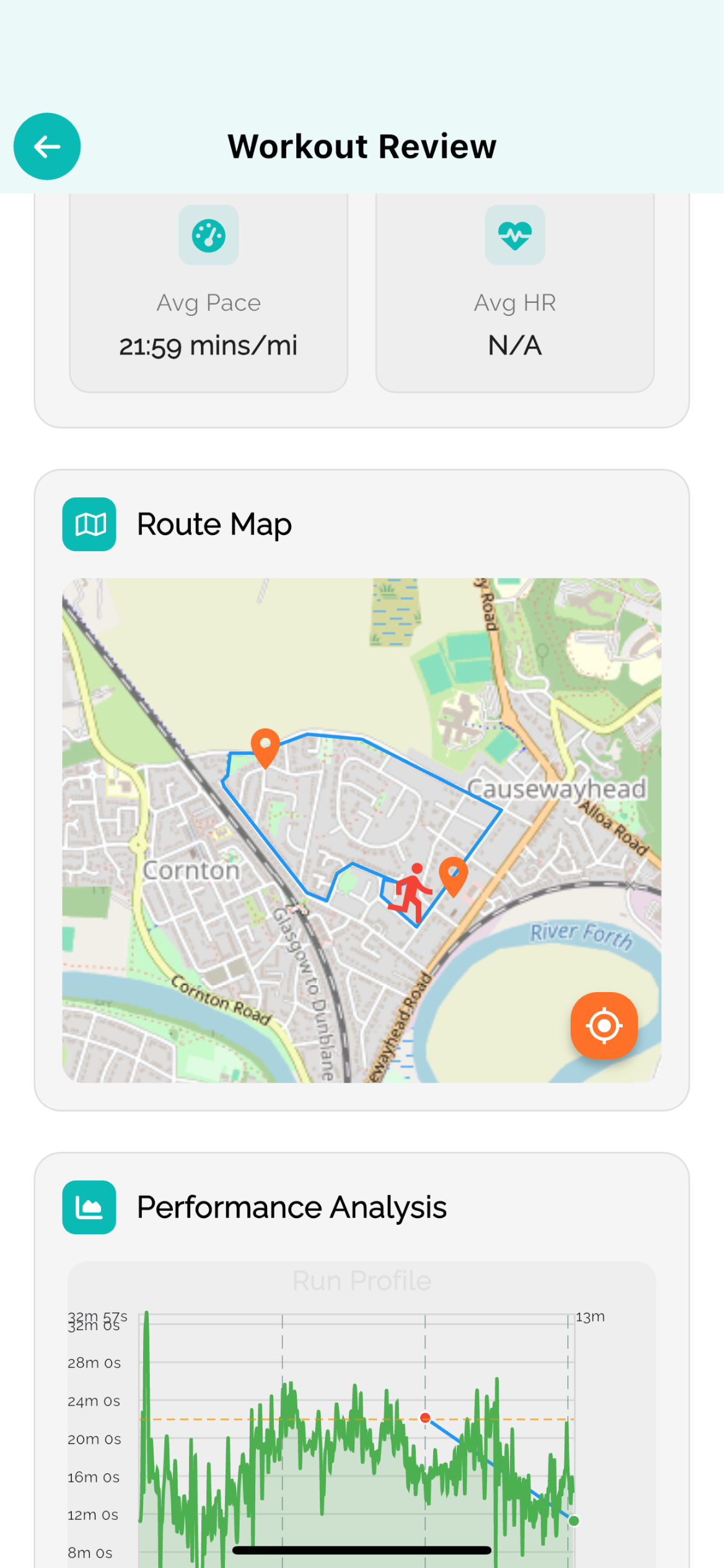
The best metric is the one that drives a change in your training. If you log your pace and volume weekly, you'll notice when you're in a rut—or when you're building momentum. Apps that flag patterns ("you've run Zone 4 three times this week, rest tomorrow") work because they close the loop: data informs decision, decision improves outcome. That's the backbone of adaptive coaching. RunV-style tools watch your trends across weeks and months, not individual workouts, because that's where real progress lives.
Ignore these vanity metrics
- Peak cadence or stride length—neither predicts speed
- Elevation gain (unless you live on a hill and train specific routes)
- Splits consistency (small variations are normal; obsessing over them breeds anxiety)
- Estimated recovery time (too many variables; use how you feel instead)
- "Fitness score"—these proprietary algorithms rarely match real race performance
The bottom line
Track pace, heart rate zones, weekly volume, and how your body feels. Those four inputs will tell you more than a dashboard crammed with 30 metrics. Over a month or two, patterns emerge. You'll know when you're ready for a push and when you need a break. That's the data that matters.
FAQ
- Should I always run at 180 cadence?
- No. Cadence varies by height, leg length, and running style. Most runners naturally land between 160 and 190 steps per minute. Focus on smooth, rhythmic turnover rather than hitting a specific number. If you're injury-prone, your coach might suggest a cadence check, but for most runners it's a distraction.
- Are calories burned on my watch accurate?
- They're estimates with margins of error of 15–25 per cent. Use them to track trends over weeks ("I'm burning more energy on longer runs"), not to make precise daily fuel decisions. Your actual energy needs depend on metabolism, muscle mass, and intensity, which watches can't measure directly.
- What's the most important metric to track?
- Weekly volume—your total running time or distance—combined with how you feel. Runners who track both volume and effort (easy days easy, hard days hard) improve fastest. Everything else is detail.
Train smarter
RunV turns this thinking into your plan — adaptive coaching that rebuilds after every run.
Keep reading