Training 5 min
What pace should I run for a 1:45 half marathon

To run a 1:45 half marathon, you need to maintain an average pace of 8:00 minutes per mile (4:58 per kilometre). This is your goal race pace, but your training paces will vary depending on the run type and your current fitness level.
What is your goal race pace?
A 1:45 half marathon breaks down to exactly 8:00 min/mile across the full 13.1-mile distance. This is the pace you need to sustain from start to finish on race day. It's steady, achievable, and leaves a small buffer for the final kilometres when fatigue sets in.
How to structure your training paces
You won't run every session at 8:00 min/mile. Different run types serve different purposes and should be run at different intensities. Structuring these correctly is what builds the aerobic fitness and speed needed to hit your target.
- Easy runs: 9:00–9:30 min/mile. These build aerobic base and aid recovery.
- Tempo runs: 7:30–7:45 min/mile. These develop lactate threshold and race-specific strength.
- Interval work: 7:00–7:15 min/mile. These build speed and running economy.
- Long runs: 8:15–8:45 min/mile. Run slightly slower than goal pace to build endurance safely.
Easy runs and recovery
Most of your weekly mileage should be at easy pace: 9:00–9:30 min/mile. This feels slow, but it's deliberate. Easy runs strengthen your aerobic system without depleting glycogen or causing unnecessary fatigue. They also allow you to recover between harder sessions, which is where the real fitness gains happen.
Building lactate threshold with tempo work
Tempo runs at 7:30–7:45 min/mile teach your body to process lactate more efficiently and hold hard efforts for longer. A typical session might be 2 km warm-up, then 4–6 km at tempo pace, then 1 km easy cool-down. This work is crucial for a sub-1:45 half marathon because it raises your lactate threshold closer to goal pace.
Speed sessions and intervals
Interval workouts at 7:00–7:15 min/mile improve your running economy and neuromuscular power. Shorter, faster repeats train your body to move efficiently at high speeds, which creates a buffer below your goal pace. A typical session: 2 km warm-up, then 6–8 x 600m at 7:10 min/mile with 90 seconds recovery jog, then 1 km cool-down.
Long runs at goal-marathon pace
Long runs should be run at 8:15–8:45 min/mile—slightly slower than your 8:00 min/mile goal race pace. Running long runs faster than necessary increases injury risk without adding fitness benefit. The aim is time on feet and mental toughness, not speed. Build gradually: add no more than 1 mile per week until you reach 11–12 miles.
Using data to refine your paces
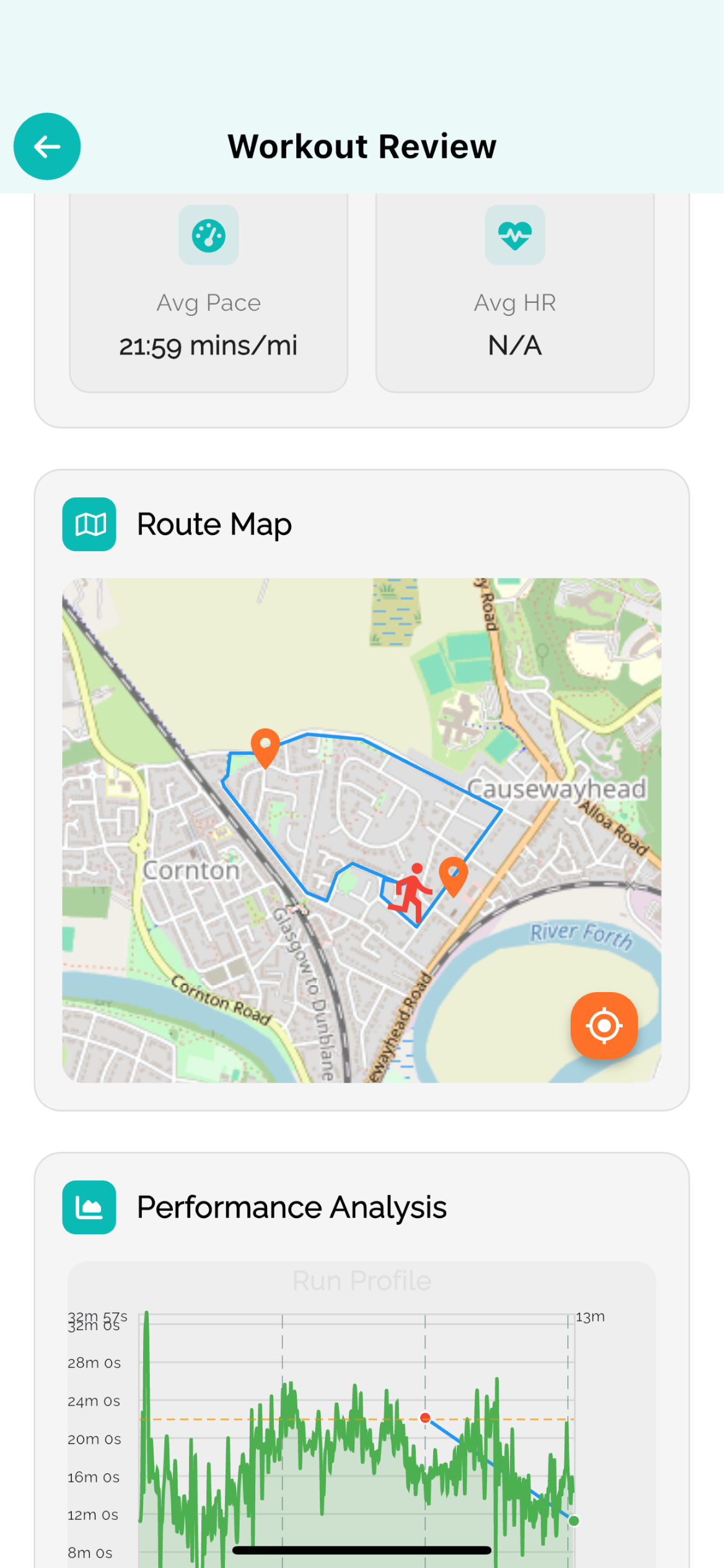
A 1:45 target is specific, and your training paces should be equally precise. RunV and similar coaching apps adjust your training zones based on recent performance data, recent resting heart rate trends, and how your body actually responds to sessions. Rather than following generic pace charts, track your runs carefully: note how each pace feels, record your heart rate, and adjust training zones every 3–4 weeks based on your improving fitness.
Key takeaway
Your goal race pace is 8:00 min/mile. Easy runs are slower (9:00–9:30), tempo runs are faster (7:30–7:45), intervals are faster still (7:00–7:15), and long runs sit just below race pace (8:15–8:45). Train these zones consistently, track your data, and adjust as your fitness improves. Hit this structure and 1:45 is within reach.
FAQ
- What if I can't hold 8:00 min/mile yet?
- Build gradually. Run your easy runs at a slower comfortable pace, and focus on tempo and interval work to build speed first. Add no more than 10% mileage per week. You can adjust your goal or give yourself more time to build fitness if 8:00 min/mile feels unachievable right now.
- Should I do a trial run at goal pace before race day?
- Yes. Around 2–3 weeks before race day, run a half-marathon-distance time trial or a 10 km race and use that data to confirm your paces feel realistic. If you're struggling, adjust your goal or dial back expectations slightly. This is better than discovering on race day that your target pace was overambitious.
- How many weeks should I train for a 1:45 half marathon?
- If you're already running 20+ miles per week consistently, 8–10 weeks of structured training is adequate. If you're newer to half marathons or running less, allow 12–16 weeks. Start building volume and base fitness first, then transition into the specific pace work described above.
Train smarter
RunV turns this thinking into your plan — adaptive coaching that rebuilds after every run.
Keep reading